

Should You Tell Teachers About Your Child’s Diagnosis? A Parent’s Decision Guide
Should you tell your child’s school about their diagnosis? Understand the pros and cons, your rights, and how to decide what’s best for your family.
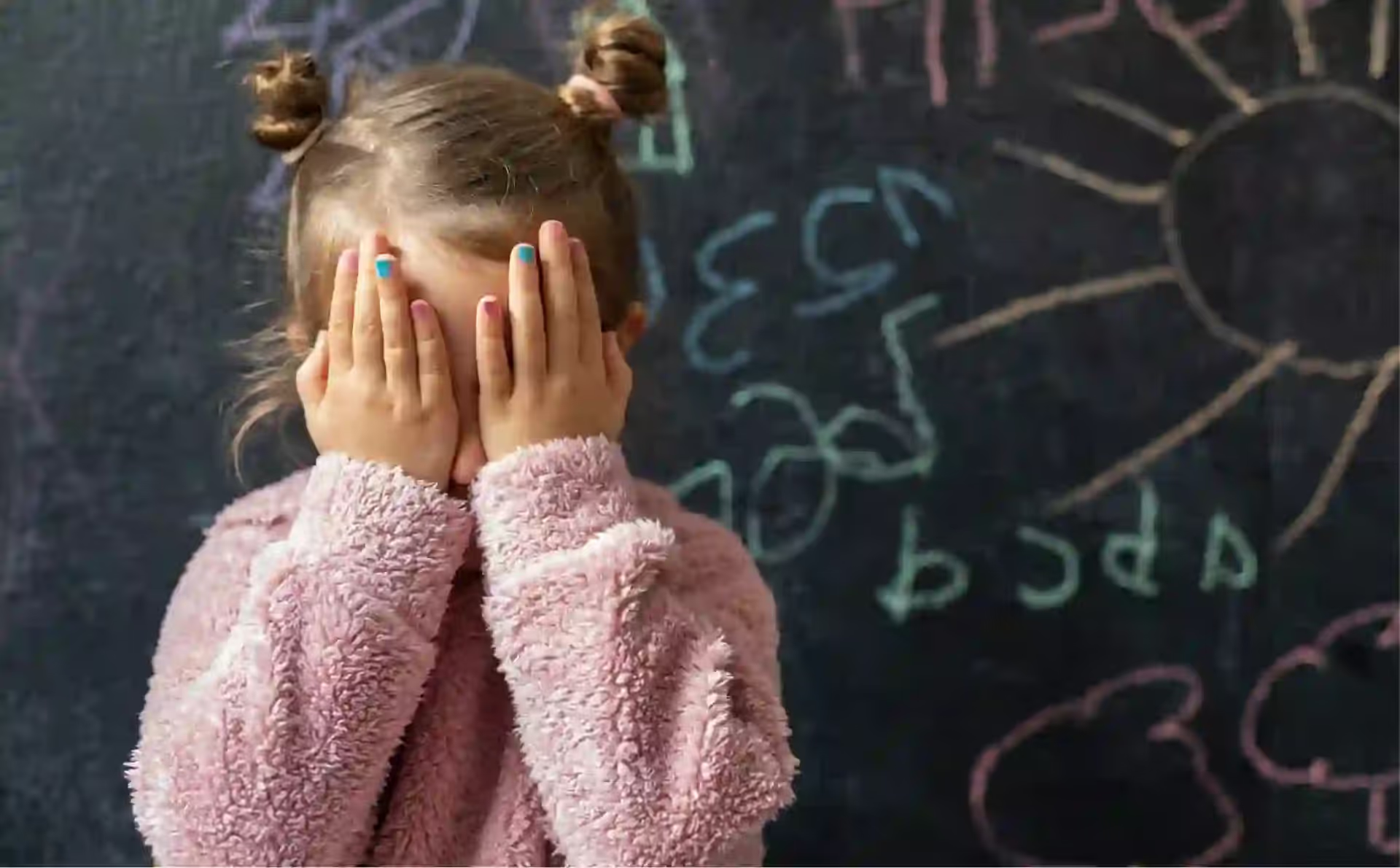
Maya talks nonstop at home. She narrates her Lego builds, asks endless questions about how clouds form, and recites entire scenes from her favorite movies. But at school? Her kindergarten teacher describes her as "selectively mute," anxious, and struggling with social connections. The school counselor suggested she might benefit from anxiety support and perhaps some social skills coaching.
Six months and one comprehensive evaluation later, Maya's parents learned she's autistic—not anxious. The quiet behavior at school wasn't fear of social interaction; it was sensory overwhelm from fluorescent lights and loud cafeterias, combined with the exhausting work of trying to decode unwritten social rules that seemed obvious to everyone else. At home, in her comfortable, predictable environment, her authentic autistic self could emerge.
Maya's story isn't unusual. Across American schools, thousands of children are being mislabeled, with anxiety becoming the default explanation for behaviors that may actually indicate autism spectrum conditions. Sometimes the reverse happens too—autistic children whose co-occurring anxiety goes unrecognized because educators assume all their struggles stem from autism alone.
This confusion isn't malicious. It stems from overlapping presentations, limited training, resource constraints, and the genuine difficulty of distinguishing between two conditions that can look remarkably similar in classroom settings. But the consequences of mislabeling are real: delayed intervention, inappropriate support strategies, and children who internalize the message that something is fundamentally wrong with them when actually, they're just being misunderstood.
This guide will help you understand why these mislabels happen, how anxiety and autism actually differ despite surface similarities, what proper assessment looks like, and most importantly, how to advocate effectively for your child to receive accurate evaluation and appropriate support.

Understanding why schools frequently misidentify autistic children as anxious—or miss autism entirely—requires looking at systemic challenges that have nothing to do with anyone's intentions.
Most general education teachers receive minimal training in developmental disabilities during their credentialing programs. They learn to manage classrooms, deliver curriculum, and handle typical behavioral challenges, but deep knowledge of autism presentation—especially subtle or atypical presentations—isn't standard. According to the National Association of School Psychologists, even school psychologists may have limited specialized training in autism assessment depending on their graduate program's focus. A teacher who's never been taught about sensory processing differences or social communication challenges in autism will naturally interpret a child's withdrawal through the lens of what they do know: anxiety, shyness, or behavioral defiance.
With 25-30 students per classroom, teachers simply cannot conduct the kind of detailed behavioral observation needed to distinguish between anxiety and autism. They see snapshots: a child avoiding group work, not making eye contact, melting down during transitions. Without time to analyze patterns, contextual triggers, and the quality of social attempts, surface-level interpretations become inevitable. The behavior looks like anxiety—the child seems nervous, avoids participation, appears uncomfortable—so anxiety becomes the working hypothesis.
School districts face significant constraints on evaluations. Comprehensive autism assessments require specialized personnel, extensive observation, standardized testing, and time—all expensive resources in districts already stretched thin. Anxiety, by contrast, can be addressed through existing counseling services, 504 accommodations, or simple classroom modifications. There's an unconscious incentive structure that pushes toward the "easier" explanation, even when it's not accurate.
Here's an uncomfortable truth: some educators and administrators still view autism as a more "severe" or stigmatizing label than anxiety. They may genuinely believe they're protecting a child and family from an autism diagnosis when they suggest anxiety instead. "Maybe she's just anxious" feels gentler, more temporary, more fixable than acknowledging neurodevelopmental differences. This protective instinct, while well-intentioned, denies children access to understanding themselves and receiving appropriate support.
Educators typically see children in one context: school. They miss how the child functions at home, during weekend activities, or in comfortable environments. A child who appears anxious and withdrawn at school but is chatty, imaginative, and confident at home presents a confusing picture. Instead of recognizing this discrepancy as meaningful diagnostic information—potentially indicating selective mutism, situational overwhelm, or masking behaviors—schools may simply focus on the school presentation and miss the fuller picture.
To understand why confusion happens, we need to clearly establish how anxiety typically manifests in educational settings.
Now here's where it gets complicated: many autistic children, especially those without obvious developmental delays, present in ways that look remarkably similar to anxiety.
Autistic children may withdraw from social situations, but for different reasons. They're not necessarily afraid of peers—they may simply find social interaction confusing, exhausting, or less interesting than their preferred activities. They might not understand why they're expected to make small talk, follow unwritten social scripts, or pretend interest in topics they find boring. The withdrawal isn't fear-based; it's preference-based or overwhelm-based.
An autistic child shutting down in a noisy cafeteria looks anxious. They appear distressed, may cover their ears or hide, might refuse to participate. But the root cause isn't social fear—it's sensory processing differences making the environment genuinely painful or overwhelming. Fluorescent lights, background noise, strong smells, crowded spaces, and multiple simultaneous conversations create neurological overwhelm that has nothing to do with social anxiety and everything to do with how their nervous system processes sensory input.
Some autistic children speak fluently at home but go mostly or completely nonverbal at school. This isn't selective mutism driven by anxiety—it's the cognitive and sensory load of the school environment consuming so much processing capacity that spontaneous language becomes difficult or impossible. Other autistic children use language in atypical ways: overly formal speech, echolalia (repeating phrases), difficulty with pronouns, or highly specific vocabulary. These patterns can be misinterpreted as anxious overthinking or social discomfort.
Autistic children often struggle intensely with transitions, becoming distressed when activities change, schedules shift, or unexpected events occur. This can look like anxiety about change, but it stems from different neurological processing. Autistic brains often need more time to disengage from one activity and prepare for the next. Unexpected changes disrupt internal predictive models about what's supposed to happen. The distress is real but the mechanism differs from anxiety about the unknown.
Perhaps the most significant source of misidentification occurs with high-masking children, particularly girls and those without obvious developmental differences. These children work extraordinarily hard to appear "normal" at school—carefully imitating peer behavior, forcing eye contact, suppressing stimming, following social scripts they've memorized. They may appear socially competent, even popular, while being internally exhausted and confused. Teachers see what looks like social anxiety or perfectionism when they're actually witnessing the massive cognitive effort required to manually process social situations that neurotypical children navigate intuitively. Research published in the Autism Research Journal shows that girls especially develop sophisticated masking strategies that hide their autism from observers while creating enormous internal stress.
Despite surface similarities, anxiety and autism are fundamentally different conditions with distinct underlying mechanisms.
Anxious children feel fear. They understand social expectations but worry intensely about meeting them. They catastrophize about negative outcomes, replay interactions obsessively, and experience genuine terror in triggering situations. Autistic children may not feel social fear but rather social confusion. They're working hard to decode expectations that aren't explicitly stated, rules that seem to change unpredictably, and communication that relies heavily on tone, facial expressions, and context rather than literal words. The internal experience is "I don't understand what's expected" rather than "I'm afraid of judgment."
Anxious children typically want social connection intensely and feel distressed when it doesn't happen. Autistic children may genuinely not understand why certain social behaviors are expected or may actively prefer solitary activities. When autistic children do seek connection, they may attempt it in atypical ways—parallel play beyond the typical age, sharing facts rather than emotions, or connecting through special interests rather than social chat. The intent exists but manifests differently.
Anxious children often respond positively, at least temporarily, to reassurance and exposure therapy. Gentle encouragement, praise, and incremental exposure to feared situations can reduce anxiety over time. Autistic children don't typically improve from reassurance about social situations because the challenge isn't emotional fear but cognitive processing differences. Telling an autistic child "it's okay, nobody's judging you" doesn't address the real challenge: that social rules feel arbitrary and change based on context in ways that are genuinely confusing.
Anxiety tends to wax and wane based on stressors, with better and worse periods. Autistic traits are neurological constants—present from early development across contexts and time. An autistic child may mask better or worse depending on energy and environmental demands, but the underlying processing differences remain consistent. A careful developmental history reveals whether current challenges are long-standing (suggesting autism) or emerged more recently in response to specific stressors (suggesting anxiety).
While anxious children may become hypervigilant to environmental stimuli when anxious, autistic children experience fundamental differences in sensory processing that exist regardless of emotional state. They may be hypersensitive (overwhelmed by sounds, lights, textures, smells) or hyposensitive (seeking intense sensory input), and these patterns remain consistent across time and contexts. Research from the CDC's child development resources confirms that sensory processing differences are core features of autism but not typical in anxiety disorders.
This distinction is crucial and frequently misunderstood by parents and educators alike.
Schools can identify educational needs and determine eligibility for special education services. They cannot diagnose autism. The distinction matters because educational eligibility focuses on whether a disability impacts learning and requires specialized instruction. A child could be autistic but not eligible for special education if their autism doesn't significantly impact academic performance in the school's assessment. Conversely, a child might receive educational services under categories like "emotional disturbance" or "other health impairment" without anyone naming autism as the underlying condition.
School evaluations typically include academic testing, observations, teacher and parent questionnaires, and sometimes brief developmental screenings. They're designed to answer: "Does this child need special education?" not "Does this child have autism?" Schools use educational rather than medical diagnostic criteria.
Medical autism diagnosis comes from qualified healthcare professionals including licensed psychologists specializing in autism assessment, pediatric neuropsychologists, developmental pediatricians, and in some states, clinical social workers or licensed professional counselors with specific autism training. These professionals conduct comprehensive evaluations including detailed developmental history, standardized diagnostic instruments like the ADOS-2 (Autism Diagnostic Observation Schedule) and ADI-R (Autism Diagnostic Interview-Revised), cognitive testing, adaptive behavior assessment, and evaluation of medical factors that might explain symptoms.
The CDC's autism information provides detailed guidance on developmental monitoring and where to seek evaluation. The gold standard remains comprehensive evaluation by professionals experienced in autism assessment who spend multiple hours directly observing and interacting with the child across structured and unstructured situations.
Ideally, families pursue both school-based educational evaluation and independent clinical evaluation. The school evaluation determines what educational supports the child receives. The clinical evaluation provides diagnostic clarity, opens doors to therapies and services outside school, and gives families and the child themselves a framework for understanding their differences. Insurance may cover portions of clinical evaluation, particularly if developmental concerns are documented by the pediatrician.
Masking—also called camouflaging—deserves its own deep examination because it's central to why autism goes unrecognized, particularly in girls and children without obvious developmental delays.
Autistic children who mask employ sophisticated strategies to hide their differences and appear neurotypical. They may force themselves to make eye contact even when uncomfortable, carefully imitate peer behaviors without understanding why those behaviors are expected, memorize social scripts for common situations, suppress stimming (self-regulatory movements like hand-flapping or rocking), prepare topics of conversation in advance, and mirror others' facial expressions and body language. Some children become adept at fading into the background—not drawing attention, not asking for help, quietly following whatever the group does.
Masking requires enormous cognitive resources. Every social interaction demands conscious processing that neurotypical children do automatically. Imagine having to manually calculate each breath, each step, each blink—that's similar to what masked autistic children do with social interaction. They're running complex algorithms in real-time: "Person is talking, I should look at their eyes—no wait, that's too intense, look at their nose—now smile because that seems appropriate—wait, they stopped talking, that means I respond—what do I say?—search memory for relevant script—execute response—monitor their face for reaction—did I do it right?"
This exhausting process continues all day at school. The child appears fine—maybe quiet, maybe a bit odd, but generally managing. Then they get home and collapse into meltdowns, crying, aggression, or shutdown. Parents see a completely different child than teachers describe. This pattern—"fine at school, falling apart at home"—is a hallmark of masking and often gets misinterpreted as simple after-school tiredness or willful misbehavior at home rather than being recognized as the predictable consequence of masking all day.
Research consistently shows that autistic girls mask more effectively and more frequently than autistic boys, contributing to significant underdiagnosis. Girls face stronger social pressures to be accommodating, to read emotions, to maintain friendships. Autistic girls often develop special interests in socially acceptable domains—animals, books, art—rather than the trains-and-dinosaurs interests that flag concern. They learn to imitate popular peers, literally studying social interaction like a foreign language. They may have a few close friendships based on shared interests rather than broad peer groups, which appears typical rather than concerning. The result is that autistic girls are diagnosed on average 4-5 years later than autistic boys, and many aren't identified until adolescence or adulthood when the social demands exceed their compensatory strategies.
Parents should watch for these indicators that a child may be masking at school: extreme fatigue after school, "Jekyll and Hyde" behavior changes between school and home, reported emotional meltdowns that teachers never see, resistance to school attendance without obvious triggering events, intensive observation of peers before attempting social interaction, delayed processing when answering questions in social situations (running through scripts), appearing socially competent but reporting feeling fake or like they're acting, difficulty explaining emotions or social experiences even when language skills are strong, and intensive special interest in understanding social rules, psychology, or how people work.
If you suspect your child's challenges stem from autism rather than or in addition to anxiety, systematic advocacy becomes essential.
Federal law under the Individuals with Disabilities Education Act (IDEA) guarantees parents the right to request evaluation if they suspect their child has a disability affecting educational performance. Make this request in writing—email counts—to the school principal and special education director. Use clear language: "I am formally requesting a comprehensive evaluation for special education eligibility under IDEA. I am concerned my child may have autism spectrum disorder affecting their educational performance. Please evaluate in all areas of suspected disability including social-emotional functioning, communication, sensory processing, and adaptive behavior."
Once the school receives your written request, they have specific timelines (typically 60 calendar days or a set number of school days depending on your state) to either complete the evaluation or provide written explanation why evaluation isn't warranted. If they decline to evaluate, they must provide prior written notice explaining their reasoning. You can dispute this decision. During the evaluation process, schools typically send home questionnaires, observe your child in classroom settings, conduct standardized testing, and gather teacher input. You should receive a copy of the evaluation report and be invited to an IEP (Individualized Education Program) team meeting to discuss results and eligibility.
Strengthen your request by providing documentation including detailed developmental history (when milestones were reached, early concerns), examples of specific challenges with dates and contexts, any outside evaluations or therapist reports, pediatrician's observations or referrals, and samples of your child's work or communication that demonstrate areas of concern. Don't rely on vague statements—specificity matters. Instead of "struggles socially," write "walks away mid-conversation without explanation, doesn't respond when peers greet them, becomes distressed when someone changes plans without warning."
Schools sometimes decline evaluation requests, arguing that the child is performing adequately academically so evaluation isn't warranted. This is a misunderstanding of the law. IDEA covers disabilities affecting educational performance—not just academics but also social-emotional development, communication, and adaptive behavior. If your child is struggling with peer relationships, experiencing emotional dysregulation at school, or requiring significantly more support than typical peers to access education, that qualifies as impact on educational performance. You can file for dispute resolution, request mediation, or file a due process complaint. Organizations like Wrightslaw provide detailed guidance on special education law and advocacy.
School evaluations serve a specific, limited purpose: determining educational eligibility. They don't provide comprehensive diagnostic clarity, extensive recommendations for home and community supports, or thorough explanation of your child's neurological profile.
Seek independent evaluation if the school evaluation feels rushed (completed in just a few weeks with minimal observation), relies heavily on questionnaires rather than direct assessment, doesn't include autism-specific standardized instruments, concludes your child doesn't have autism despite clear symptoms, determines your child isn't eligible for services despite obvious struggles, or provides vague recommendations without actionable strategies. Additionally, if school staff lack experience with autism, especially subtle presentations, or if your child is a girl (since schools often miss autism in girls), private evaluation becomes more important.
School evaluations are free, completed by people who see your child in educational settings, and result directly in educational support if eligibility is determined. However, they're limited in scope, may take a long time due to backlog, and evaluators may have varying levels of autism expertise. Private evaluations offer more comprehensive assessment, access to specialists with extensive autism experience, quicker completion (often weeks rather than months), and detailed reports useful for therapy referrals and understanding your child's needs. The downsides are significant cost (often $2,000-5,000), insurance coverage varies widely, and schools aren't obligated to accept private evaluations for eligibility determination (though they must consider them).
Many insurance plans cover autism evaluation, especially if a pediatrician provides a referral. Check your benefits carefully—some plans cover evaluation for diagnosis but not the therapeutic recommendations or educational consultation that often accompany comprehensive reports. Ask your pediatrician for referrals to autism specialists. Contact local autism organizations or university clinics, which often have sliding-scale fees. Check professional directories through the American Psychological Association. Look specifically for providers listing autism, ADOS-2 administration, and experience with your child's age and presentation.

Research published through the National Library of Medicine shows that approximately 40-50% of autistic children also meet criteria for anxiety disorders. Living in a world designed for neurotypical brains creates chronic stress for autistic individuals. Constant social confusion, sensory overload, unpredictability, and the exhaustion of masking create conditions ripe for anxiety development. Autistic children often experience repeated social failures despite trying hard, creating legitimate social anxiety.
When anxiety and autism co-occur, the autistic features remain consistent across contexts and time, while anxiety fluctuates based on stressors and situations. Core social communication differences persist even when anxiety is well-managed. Sensory processing differences don't improve with anxiety treatment, though anxiety may amplify sensory sensitivity. Reviewing early development reveals whether social and communication differences predated anxiety.
When both conditions are present, treatment must address both. Autistic children benefit from autism-informed accommodations including sensory supports, explicit social instruction, predictable environments, and acceptance of neurodiversity. They also need anxiety treatment, but it must be adapted—traditional cognitive behavioral therapy may need modification to account for different cognitive processing. Exposure therapy should account for real differences in social cognition and sensory processing rather than assuming fears are purely psychological.
Educators play crucial roles but shouldn't attempt diagnosis. Instead, teachers can create supportive environments that benefit children regardless of whether their challenges stem from anxiety, autism, or both.
Allow flexible seating options including bouncy balls, standing desks, or quiet corners. Provide noise-canceling headphones for students overwhelmed by classroom sounds. Use natural lighting when possible and avoid harsh fluorescent lights. Allow fidget tools and movement breaks. Reduce unnecessary visual clutter. These sensory accommodations help autistic children manage overwhelm and anxious children feel more regulated.
Instead of assuming children know implicit social rules, teach them explicitly. Explain why we make eye contact, how to join groups, when small talk is expected, and how to exit conversations politely. This explicit instruction helps autistic children access information neurotypical children absorb naturally, and it helps anxious children feel more confident about social expectations.
Regular, private check-ins allow children to communicate struggles that may not be visible. Use emotion charts, written options, or verbal check-ins depending on the child's communication style. Listen for patterns that suggest sensory overwhelm versus social anxiety versus other challenges. Allow multiple ways to demonstrate knowledge and participate. Some children can write fluently but struggle to speak in front of peers. Offering alternatives creates access without requiring diagnosis to justify accommodation.
When challenging behaviors occur, investigate before assuming motivation. A child refusing participation may be overwhelmed, confused about expectations, experiencing physical discomfort, or anxious. Ask the child what's hard, what would help, what they need. Involve parents to understand whether school behavior matches home patterns.
How Parents Can Support at Home
Children who can't or don't articulate struggles need other outlets. Some children draw their feelings, act them out through play, or write stories that reveal their inner experience. Create judgment-free time where your child can decompress without demands for social interaction, eye contact, or conversation. Notice what naturally helps them regulate—movement, dim lighting, specific activities, solitude—and protect time for these regulation strategies.
Help children build vocabulary for their internal experiences. Instead of "you seem upset," try "I notice your body is tense and your voice is louder—I wonder if you're feeling frustrated or overwhelmed?" Validate their feelings even when you don't fully understand. Distinguish between emotions and behaviors: "It's completely okay to feel angry. We need to find ways to express anger that don't hurt people or things."
Whether your child's challenges stem from anxiety, autism, or both, predictability reduces stress. Use visual schedules showing daily and weekly routines. Preview upcoming changes. Build in transition warnings. Create rituals that mark transitions and provide security.
Keep a journal noting when challenges occur, what preceded them, and what helped. Over time, patterns emerge. Does your child struggle more after gym class, after group projects, on unpredictable days, or before tests? This documentation helps providers distinguish between anxiety and autism and identifies specific triggers to address.
Children internalize others' interpretations of their struggles. An autistic child repeatedly told they're "just anxious" or "need to try harder socially" learns to see their neurodevelopmental differences as personal failures. They develop shame about characteristics that are simply how their brain works. Accurate understanding allows children to develop healthy self-concept: "I'm autistic, which means my brain works differently—I need certain supports and that's okay" versus "I'm broken and anxious and something's wrong with me."
Autism-specific interventions in early childhood significantly improve long-term outcomes. When autism goes unrecognized and anxiety is treated instead, children miss critical windows for developing communication strategies, social understanding, and self-advocacy skills. Early, accurate identification allows immediate access to appropriate supports including speech therapy for pragmatic language, occupational therapy for sensory processing, social skills instruction designed for autistic learning styles, and autism-informed educational strategies.
Unidentified autistic children, especially those who mask extensively, face dramatically elevated risks for anxiety, depression, and burnout during adolescence and adulthood. Research from Harvard's Center on the Developing Child shows that chronic stress during development fundamentally alters brain architecture and stress response systems. An autistic child spending years masking without support experiences chronic developmental trauma, significantly increasing vulnerability to mental health crises later.
Intelligence and academic potential mean nothing if a child can't access learning due to sensory overwhelm, social confusion, or anxiety. Autistic children given only anxiety support may continue struggling with sensory environments, unclear instructions, and social demands that interfere with learning. Either scenario results in children performing well below their potential because the root cause of challenges remains unaddressed.
Frame concerns collaboratively: "I'm noticing some patterns at home that concern me. I'd love to hear what you're seeing at school so we can understand what's happening." Share specific observations without insisting on your conclusion. Ask teachers about their observations and hypotheses before advocating for specific actions. This collaborative stance increases receptiveness.
Keep copies of all communication with schools—emails, letters, evaluation reports, IEP documents. Document verbal conversations in follow-up emails: "Thank you for our meeting today. Just to confirm, we discussed my request for evaluation and you mentioned X timeline." This creates records that protect both you and the school.
Use precise special education terminology. Say "I'm requesting evaluation under IDEA" rather than "I want him tested." Reference specific disability categories when relevant. Schools respond to language that references legal requirements and formal processes. Don't rely on vague concerns. Bring specific examples with dates, frequencies, and contexts. Create simple charts showing patterns. Bring work samples, photos, or videos that illustrate concerns. Objective data is harder to dismiss than subjective worry.
If the school isn't responsive to initial requests, escalate systematically. Start with the teacher, then contact the school counselor or psychologist, then the principal, then the district special education director. If necessary, file formal complaints with your state education department or request mediation. You can bring anyone to IEP meetings or evaluation discussions—family members, advocates, therapists, or attorneys. Let the school know in advance who's attending.
Section 504 of the Rehabilitation Act is a civil rights law preventing discrimination against people with disabilities. It requires schools to provide accommodations that allow equal access to education but doesn't require specialized instruction. An Individualized Education Program (IEP) under IDEA is specifically for students needing special education—specialized instruction going beyond accommodations. The protections, services, and parent rights differ significantly.
A 504 plan suits students who can access the general education curriculum with accommodations but don't need specialized instruction. If your child needs specialized social skills instruction, speech/language therapy for pragmatic language, occupational therapy for sensory or motor needs, modified curriculum or instruction, behavioral intervention plans, individualized goals and progress monitoring, or significantly more support than simple accommodations can provide, push for an IEP. IEPs also offer stronger legal protections, more specific services, and extensive parent rights.
Be direct: "I'm requesting evaluation for special education eligibility under IDEA. Based on the challenges we're seeing in social communication, sensory processing, and adaptive behavior, I believe my child needs specialized instruction and related services, which requires an IEP rather than just accommodations under 504."
Researchers are developing machine learning algorithms that analyze video footage of children to identify early autism markers—atypical movement patterns, reduced eye contact, and other subtle features. These screening tools aren't diagnostic but can flag children for comprehensive evaluation earlier. Apps using parent-recorded videos are becoming available, though accuracy varies.
The COVID-19 pandemic accelerated acceptance of telehealth evaluations, which now allow families in underserved areas to access specialized autism evaluators remotely. Research shows that experienced evaluators can conduct valid assessments via video platforms, particularly for older children and those with strong verbal skills.
The most comprehensive approach involves multiple specialists evaluating simultaneously or sequentially and collaborating on conclusions. A team might include a psychologist conducting cognitive and autism-specific testing, a speech-language pathologist assessing communication, an occupational therapist evaluating sensory processing, and a developmental pediatrician reviewing medical factors.
Tomorrow Morning: Create a document listing specific observations with dates and examples. Include developmental history—when did walking, talking, and social milestones occur? Note sensory sensitivities, intense interests, social patterns, communication differences. Be specific and factual.
Tomorrow Afternoon: Email or call your pediatrician requesting a developmental discussion. Say: "I have concerns about my child's social communication and sensory processing. I'd like to discuss whether an autism evaluation is warranted and get a referral."
This Week: Send written request to your school principal and special education director: "I am formally requesting a comprehensive special education evaluation for my child,
, under IDEA. I am concerned that may have autism spectrum disorder affecting educational performance. Specifically, I've observed: . Please evaluate in all areas of suspected disability including social-emotional functioning, communication, sensory processing, and adaptive behavior."This Week: Research local autism specialists. Call offices asking about experience, process, timeline, and costs. Ask: "Does the evaluator have experience with subtle presentations/girls/high-masking children?" Schedule consultations with 2-3 providers if possible.
This Month: Find local or online support groups for parents navigating similar questions. The National Institute of Mental Health maintains resource directories. Local autism societies often have parent support groups.
Ongoing: Continue learning about autism and anxiety. Evaluations take time—school evaluations often take 2-3 months; private evaluations may take weeks. Use this time to observe, document, and prepare.
Emma, Maya, Marcus, Sofia—these children and thousands like them spend years misunderstood because anxiety and autism can look remarkably similar from the outside, especially in school settings where masking is common and observation time is limited. The confusion is understandable, but its consequences are real.
Mislabeling isn't just a diagnostic technicality. It shapes everything: the child's self-understanding, the support they receive, the accommodations they're given, the way teachers interact with them, and ultimately, their entire educational trajectory. An autistic child treated only for anxiety learns they're mysteriously failing at something that should be working. An anxious child inappropriately assigned autism services receives interventions that don't address their core struggles.
Accurate understanding matters because it creates alignment between a child's actual needs and the support they receive. It allows children to understand themselves accurately—not as broken or failing, but as neurologically different in specific, meaningful ways. It gives educators information they need to provide truly helpful accommodations. It opens doors to appropriate therapies, community resources, and legal protections.
You know your child in ways no five-minute classroom observation can capture. You see the discrepancies between school reports and home reality. You notice the exhaustion, the masking, the confusion, the distress that doesn't quite fit the anxiety explanation. Trust those observations. They're legitimate insights about your child's experience.
Advocating for proper assessment isn't about labels or diagnoses for their own sake. It's about accuracy, understanding, and access to support. It's about ensuring your child receives help that actually helps, built on a foundation of accurate understanding rather than well-intentioned guesses.
Whether your child is autistic, anxious, both, or something else entirely, they deserve evaluation by qualified professionals who take time to understand their complete profile. They deserve educators who implement evidence-based strategies matched to their actual needs. And they deserve to grow up understanding themselves accurately—as worthy, capable, and different in ways that make sense.
Start today. Document, request, research, and advocate. Your child is counting on you to see past surface similarities to the truth underneath—and to fight for understanding that leads to genuine support.
Related posts
Should you tell your child’s school about their diagnosis? Understand the pros and cons, your rights, and how to decide what’s best for your family.
Stuck on a 2-year ADHD waiting list? Learn why the system is failing, what you can do now to support your child, and how to advocate without a diagnosis.
When a talkative child becomes silent at school, it’s not shyness—it may be selective mutism. Learn why waiting is harmful and how early intervention restores her voice.
Your child won’t “catch up with time.” Learn how to trigger an EHCP in 6 weeks, turn concern into legal action, and secure support before confidence is lost.
How to tell sensory processing issues from “bad behaviour” in class—recognise signs, avoid harmful strategies, and learn what truly helps children like Marcus thrive.